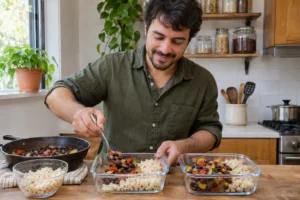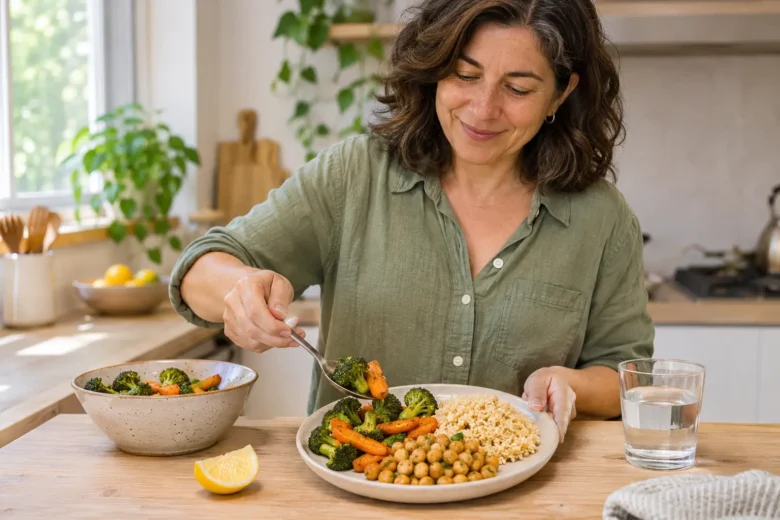
To build a balanced lunch or dinner, combine vegetables, a protein food, and a grain or another starchy food, then add seasonings and a little oil or another flavorful topping. The same approach can work with a rice bowl, sandwich, soup, or familiar family meal.
You do not need a new recipe every day. Often, the most useful question is: What could I add to the meal I already planned? Pasta might need beans and vegetables. A chicken salad might need bread or rice. A sandwich might benefit from a vegetable side.
This guide explains how to make those decisions with ordinary groceries. The combinations below are meal-building ideas, not laboratory-tested recipes or individualized nutrition plans.
Key Takeaways
- Use a plate guide as a flexible starting point, not a fixed amount everyone must eat.
- Look at the components of the whole meal, including sides, rather than judging one ingredient alone.
- Apply the same approach to mixed dishes; food does not need to sit in separate sections.
- Begin with what you have, then add the component that is missing.
Start With a Flexible Plate Guide
Harvard’s Healthy Eating Plate suggests roughly half a plate of vegetables and fruit, one-quarter whole grains, and one-quarter protein foods, with healthy plant oils used in moderation. The proportions are visual guidance rather than calorie percentages or prescribed serving sizes. [1]
For lunch or dinner, you might use a generous vegetable side, a portion of whole grains, and fish, poultry, beans, or another protein food. Fruit can accompany the meal if you enjoy it; it does not have to be arranged on the same plate.
The important distinction is between proportions and quantity. A small and a large plate can look similar while containing different amounts of food. Your needs cannot be determined by a photograph of someone else’s dinner.
What if the meal is mixed together?
Canada’s food guide explains that its plate proportions can also guide bowls, lunch boxes, shared platters, and mixed dishes. Foods do not have to remain in separate sections to contribute to a balanced meal. [2]
For a stew, think about what goes into the pot and what you serve alongside it. For a sandwich, include the bread, filling, and sides in your assessment. There is no need to pull a finished meal apart to make it resemble a diagram.
Choose the Components Before Choosing a Recipe
The table below is a practical planning aid. Foods can contribute several nutrients, so these roles are not exclusive categories.
| Meal component | Everyday options | A useful kitchen question |
|---|---|---|
| Vegetables | Broccoli, cabbage, carrots, peppers, tomatoes, leafy greens, frozen vegetable mixtures | Which option can I wash, cook, or serve with the time available? |
| Protein food | Beans, lentils, tofu, eggs, fish, chicken | What is already cooked or easy to prepare safely? |
| Grain or starchy food | Brown rice, whole-wheat bread, pasta, tortillas, potatoes | What fits the dish and my appetite? |
| Flavor and finishing ingredients | Olive oil, lemon, herbs, spices, salsa, tahini, plain yogurt | What will make the combination enjoyable? |
Potatoes appear here as a practical starchy option, not as a whole grain. Plate guides classify some foods differently; Harvard’s guide, for example, excludes potatoes from its vegetable section. [1] A potato-based meal can still include another vegetable, a protein food, and a flavorful topping.
If the protein component is where you usually get stuck, our high-protein dinner ideas offer additional combinations. This guide focuses on how the rest of the meal fits around that choice.
A Four-Step Method for Everyday Meals
1. Start with the food you already intend to use
Perhaps you have rice left from yesterday, a can of chickpeas, or vegetables that need cooking. Begin there rather than searching for a recipe that requires a completely different grocery list.
Write that ingredient down, then check the other meal components. Starting with rice does not mean rice has to be the only substantial part of dinner. Starting with chicken does not mean adding more chicken is the most useful next step.
2. Add a vegetable in a manageable form
Choose an option that works with your equipment and schedule. That could be sliced cucumber, a bagged salad prepared according to its instructions, or frozen vegetables cooked as directed.
If a large raw salad is unappealing, try cooked vegetables instead. Texture and preparation matter: shredded cabbage, roasted cabbage, and cabbage stirred into soup create different eating experiences.
3. Check the protein and grain or starch components
If you started with pasta, consider adding lentils, beans, tofu, or another protein food. If you started with eggs and vegetables, consider bread, rice, or potatoes alongside them.
This is a prompt to notice the meal’s structure, not a demand to add every possible food. Beans, for example, can contribute to more than one nutritional role. You do not need a second protein food merely because the first one comes from plants.
4. Finish for flavor and adjust the amount
Try lemon and olive oil, salsa and cilantro, or plain yogurt with herbs. Choose one direction rather than adding several unrelated sauces.
Then serve an amount that fits your needs. If the meal feels too small, increase a component or add a side rather than assuming that the visual proportions set a maximum you cannot exceed.
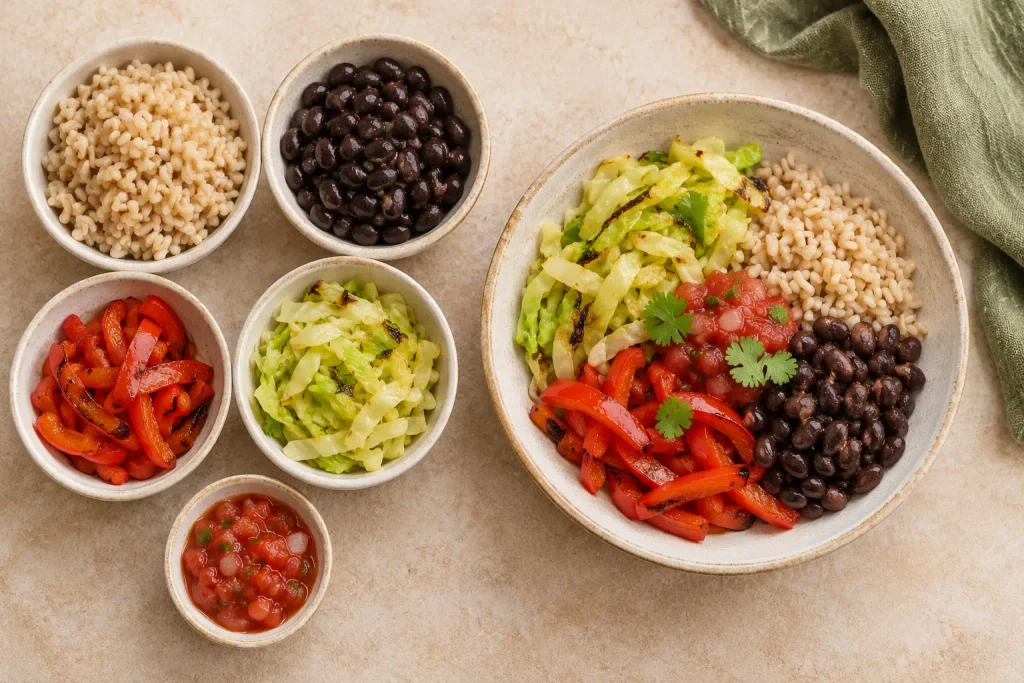
Combine familiar ingredients into a meal bowl, adjusting portions and seasonings to suit your needs and preferences.
Four Ways to Apply the Method
These examples show assembly choices rather than exact nutrient totals. Cook ingredients safely, follow package directions, and adapt portions and ingredients for your needs and allergies.
1. A rice bowl from cooked ingredients
Start with cooked brown rice. Add cooked black beans and a generous portion of cooked peppers and cabbage. Finish with salsa and avocado, if available.
Make it practical: Warm the rice and beans together if appropriate, then add the vegetables. Keep any cold toppings separate until serving.
Change the format: Put the same components into a tortilla, with some vegetables served on the side if they do not fit inside.
Use what you have: Replace rice with another cooked grain, or use a baked potato as the base. This changes the food, but preserves the idea of checking the whole meal.
2. A sandwich with a purposeful side
Fill whole-grain bread with cooked chicken or mashed chickpeas, tomato, lettuce, and a spread you enjoy. Add cucumber slices, carrots, or another vegetable alongside it.
Make it practical: A side can solve a space problem. You do not have to force an entire meal’s vegetables between two slices of bread.
Change the texture: Toast the bread, chop the filling more finely, or serve the components separately if that is easier to eat.
For work: Keep perishable fillings and sides refrigerated or in a properly chilled insulated bag until eating. A desk drawer is not suitable storage for a perishable lunch.
3. A pasta meal with more than sauce
Combine cooked pasta with cooked lentils, tomato sauce, and cooked zucchini or spinach. Season to taste and add a little olive oil or grated cheese if desired.
Make it practical: Add vegetables to the sauce, or serve them separately. Either arrangement can work.
Change the protein food: Use white beans or tofu instead of lentils. Choose the version that suits the sauce and the ingredients available.
Keep the goal clear: This is a way to assemble the meal, not a requirement to replace all your usual pasta or double the number of ingredients.
4. Soup with a useful accompaniment
Start with a vegetable soup you already make. Add cooked beans or chicken if it needs a protein component, and serve whole-grain bread alongside it if the soup contains little grain or starch.
Make it practical: Consider the soup’s actual ingredients. A lentil soup with potatoes needs a different addition from a broth containing only a few vegetables.
Change the accompaniment: Try rice or a small sandwich instead of bread, according to appetite and preference.
Avoid unnecessary additions: If the soup already contains several components, you may only want fruit, a vegetable side, or no extra dish at all.
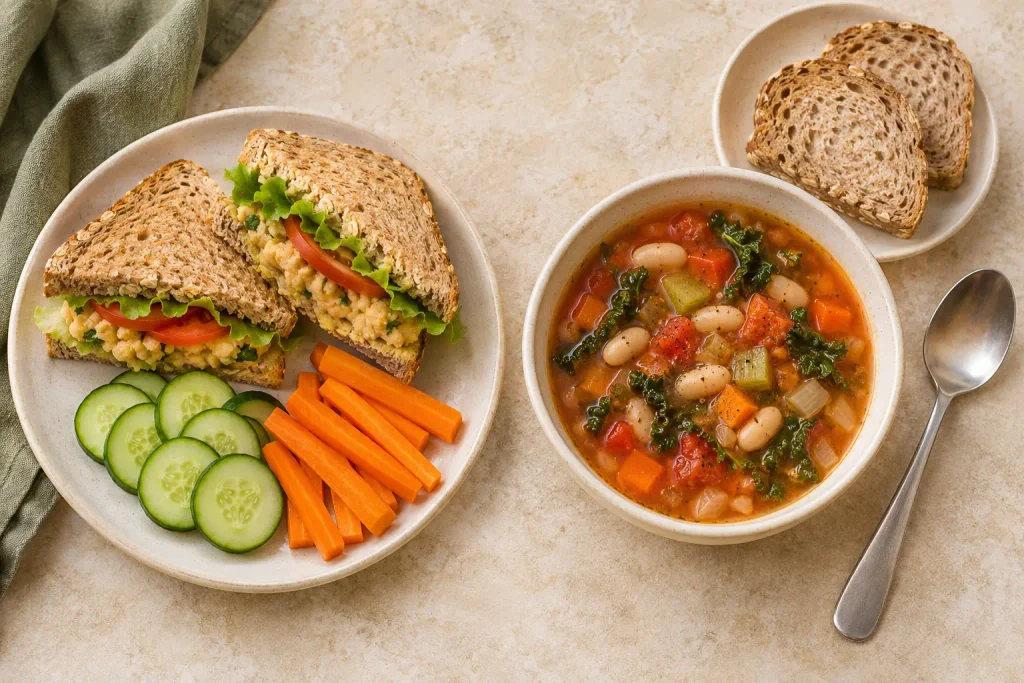
A sandwich with a vegetable side or a bean-and-vegetable soup with bread offers different ways to combine everyday meal components.
Complete a Familiar Meal Instead of Replacing It
| If your starting meal is… | Consider this adjustment |
|---|---|
| Rice with a small amount of sauce | Add beans or another protein food and cooked vegetables |
| Chicken with a few lettuce leaves | Add a grain or starchy side and a more substantial vegetable portion |
| Pasta with tomato sauce | Stir in lentils or beans and add vegetables to the sauce or alongside |
| Vegetable soup | Check whether it includes a protein food and enough food overall for your meal |
| A sandwich that leaves you wanting more | Add a side or increase the filling, based on what is missing and your appetite |
These are options, not corrections everyone must make. The starting portion and the ingredients already present matter.
How Much Should You Serve?
NIDDK distinguishes a portion—the amount you choose to eat—from the serving size used on a Nutrition Facts label. A label serving is not a personal recommendation. Food needs vary with factors such as body size, age, and activity. [3]
Use meal examples as starting points, then consider hunger, fullness, activity, and any professional advice you follow. Someone doing physically demanding work may need a different amount from someone with a different routine.
If you regularly remain hungry after lunch, review whether the meal contains enough food overall. Adding a few vegetable leaves to an undersized meal does not necessarily address that issue.
Use Convenience Foods Thoughtfully
USDA budget guidance recommends planning around what you need, comparing unit prices, and using beans and canned or frozen vegetables to stretch meals. Buying more only helps if you can store and use it before it spoils. [4]
For your next shopping trip, choose a few ingredients that work in several formats. Rice, beans, cabbage, and tomatoes might become a bowl one day and a soup or tortilla filling another day. You do not need separate shopping lists for every lunch.
For packaged sauces, soups, and ready-made components, compare labels. FDA guidance recommends checking serving size and using the Nutrition Facts panel to compare nutrients such as sodium, saturated fat, added sugars, and fiber. Account for how much of the product you actually use. [5]
Convenience and a thoughtful meal can coexist. The useful question is what a packaged item contributes and what you might serve with it.
Handle Leftovers Safely
USDA guidance recommends refrigerating perishable leftovers promptly and within two hours, or within one hour when the temperature is above 90°F (32°C). Keep the refrigerator at 40°F (4°C) or below, use refrigerated leftovers within three to four days, or freeze them for longer storage. Reheat leftovers to 165°F (74°C), checking with a food thermometer. [6,7]
Label containers with the date so tomorrow’s lunch does not depend on remembering when the food was cooked. Freeze portions you do not expect to use in time.
Start With One Meal You Already Make
Choose a familiar lunch or dinner this week. Identify the vegetables, protein food, and grain or starch it contains. Then decide whether it needs an addition, a substitution, or simply a different amount.
That might mean adding beans to soup, serving vegetables beside a sandwich, or including rice with eggs and greens. You can keep the meal recognizable while making it work better for your routine.
For breakfast-specific ideas, see our guide to high-fiber breakfast foods.
About the Author

Manoel Lages writes educational health and wellness content for Virtudes Digital, using established nutrition resources to explain everyday food choices.
Medical disclaimer: This article provides general education, not personalized medical or dietary advice. If you have a condition requiring a prescribed eating plan, food restrictions, or difficulty meeting your nutritional needs, ask a qualified healthcare professional or registered dietitian how to adapt these ideas.
References
- Harvard T.H. Chan School of Public Health, The Nutrition Source. Healthy Eating Plate. Accessed November 16, 2026. Read the guide.
- Health Canada. Make healthy meals with Canada’s food guide plate. Accessed November 16, 2026. Read the guidance.
- National Institute of Diabetes and Digestive and Kidney Diseases. Food Portions: Choosing Just Enough for You. Accessed November 16, 2026. Read the guide.
- U.S. Department of Agriculture. Eat Healthy on a Budget. MyPlate tip sheet, FNS-905-23. March 2022. Accessed November 16, 2026. Read the tip sheet.
- U.S. Food and Drug Administration. How to Understand and Use the Nutrition Facts Label. Accessed November 16, 2026. Read the guidance.
- U.S. Department of Agriculture, Food Safety and Inspection Service. How do I handle leftovers safely? Accessed November 16, 2026. Read the guidance.
- U.S. Department of Agriculture, Food Safety and Inspection Service. How do I reheat leftovers safely? Accessed November 16, 2026. Read the guidance.