

Getting older can bring a practical nutrition question: are your everyday meals providing enough protein to support your muscles?
The answer depends on your body weight, health, activity, and appetite. You do not need a complicated eating plan, but knowing a reasonable daily range can make food choices easier.
This guide explains commonly recommended amounts, how to estimate your intake, and where foods and supplements fit into the picture.
This guide provides general nutrition information. If you have kidney disease or follow a prescribed diet, consult your healthcare professional before changing your protein intake.
Quick Answer: How Much Protein Do Older Adults Need?
For generally healthy older adults, particularly those over 65, expert groups commonly suggest 1.0–1.2 grams of protein per kilogram of body weight per day. For someone weighing 70 kg, or about 154 lb, that means approximately 70–84 grams daily. [1]
ESPEN’s geriatric nutrition guideline recommends at least 1 gram per kilogram daily, with the amount adjusted to nutritional status, activity, illness, and tolerance. Higher amounts, often 1.2–1.5 g/kg, may be considered during illness or when malnutrition is present or a concern, under professional guidance. [2]
These ranges are starting points for a conversation, rather than a prescription for everyone. More protein is not automatically better, and kidney disease can substantially change the appropriate advice.
Why Protein Needs Can Change With Age
Dietary protein supplies amino acids that the body uses to build and maintain tissues, including muscle. Older muscle can become less responsive to the usual signals from food and exercise, a phenomenon called anabolic resistance. [3]
At the same time, reduced appetite or less varied meals can make eating enough more difficult. That combination helps explain why protein deserves attention as people age.
However, muscle health involves more than a nutrient target. Activity, illness, and overall nutrition also matter.
For the broader picture, read Muscle Loss With Age: What Changes and What Can Help?, which explores age-related muscle changes and practical ways to support strength and function.
How to Estimate Your Daily Protein Intake
For an initial estimate, multiply body weight in kilograms by 1.0 and by 1.2. If you use pounds, divide by approximately 2.2 first.
| Body weight | Approximate weight in pounds | Daily protein at 1.0–1.2 g/kg |
|---|---|---|
| 50 kg | 110 lb | 50–60 g |
| 60 kg | 132 lb | 60–72 g |
| 70 kg | 154 lb | 70–84 g |
| 80 kg | 176 lb | 80–96 g |
| 90 kg | 198 lb | 90–108 g |
These are mathematical examples using the expert range in reference 1. They are not individualized recommendations.
Someone weighing 154 lb, for example, could use 70–84 grams as a discussion range when reviewing their current eating pattern with a registered dietitian.
If you have obesity, significant underweight, swelling, or recent unexplained weight changes, ask which body weight should be used. A simple calculator may not reflect your situation accurately.
Also remember that grams of food are different from grams of protein. A 100-gram portion of chicken does not contain 100 grams of protein. Check the protein amount for the actual serving you eat.
Should You Spread Protein Across Meals?
Including a protein source at breakfast, lunch, and dinner is a convenient way to work toward your daily total.
For example, a person aiming for about 75 grams could plan approximately 25 grams at each of three meals. That is an organizational example, not a biological threshold that everyone must meet.
The evidence on distribution is mixed. In a small eight-week randomized trial involving 14 older adults, researchers found no significant differences in lean mass, strength, or physical function between even and uneven protein distribution patterns. Its small sample and short duration limit how broadly the findings can be applied. [4]
A practical approach is to look for meals that contain little protein and improve those first. If breakfast is usually coffee and toast, adding eggs, yogurt, or another suitable protein food may be easier than making dinner much larger.
You do not need to divide your intake perfectly or force a large meal when your appetite is low. A smaller meal plus a snack may fit your routine better.
Foods That Can Help You Reach Your Target
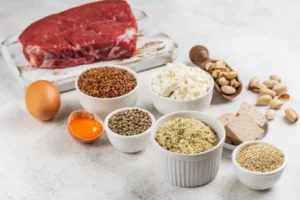
There are many ways to build protein into everyday meals. USDA’s MyPlate guidance includes seafood, lean meat, poultry, eggs, beans, peas, lentils, nuts, seeds, and soy products among protein-food options. [5]
Milk and yogurt also contribute protein. Fortified soy alternatives can be useful options, although products differ, so read their labels. [6]
Rather than choosing one “best” food, think about combinations you enjoy:
- Breakfast: eggs with toast, Greek yogurt with oats, or a tofu scramble.
- Lunch: a chicken sandwich, lentil soup, or a bean-and-grain bowl.
- Dinner: fish with vegetables, tofu with rice, or a turkey-and-bean chili.
- Snacks: yogurt, cottage cheese, or another food that suits your needs.

Everyday meals can include a variety of animal and plant protein sources to help meet individual protein needs.
Use familiar foods and affordable choices. Canned beans, eggs, and canned fish can make meal preparation simpler, while frozen options can help reduce waste.
For packaged foods, compare the protein listed per serving with the portion you actually consume. Yogurts and plant-based drinks, in particular, can vary considerably between brands.
What a Protein-Conscious Day Could Look Like
Here is a flexible planning example for someone discussing a daily target around 75 grams:
| Meal | Illustrative protein allocation |
|---|---|
| Breakfast | 20 g |
| Lunch | 25 g |
| Dinner | 25 g |
| Snack | 5 g |
| Daily total | 75 g |
This table shows one way to distribute a hypothetical 75-gram daily protein target. It does not prescribe meal sizes or imply that specific foods automatically provide these amounts. Actual protein intake depends on the products and portions consumed. Your daily needs and preferred distribution may differ.
This example shows how a daily target can be shared across meals. It is not a complete meal prescription, and protein is only one part of a balanced diet.
To make the idea useful, record what you normally eat for two or three days. Then identify one manageable adjustment, such as adding a protein-containing breakfast or improving a lunch that is usually very small.
Protein Works Alongside Strength Exercise
Food provides building materials, while resistance exercise challenges muscles to work. The National Institute on Aging describes strength training as a way to help maintain muscle mass and improve mobility as people age. [7]
Possible activities include resistance bands, suitable weights, or supported chair stands. The appropriate starting point depends on your ability, balance, and health.
Walking remains a valuable activity, but it creates a different challenge from muscle-strengthening exercise. A physical therapist or qualified professional can help adapt a routine when mobility or confidence is limited.
The aim is consistent, manageable progress. Neither a high protein number nor a supplement can promise that strength will improve without considering the rest of the person’s situation.

Balanced nutrition and strength exercise work together to support muscle health and everyday function as we age.
What About Protein Powders and Amino Acid Supplements?
A protein powder can be a convenient way to add protein when food alone is difficult to manage. It is optional, and the actual contribution should be taken from the product’s nutrition label.
Essential amino acids are the components of protein that must come from the diet. Amino acid supplements provide selected amino acids, while protein foods also offer other nutrients. Their roles overlap, but they are not interchangeable meals. [3]
Be cautious with claims that a small serving of amino acids “replaces” a much larger amount of dietary protein. Grams of amino acids should not be converted into grams of protein using an unsupported marketing multiplier.
If you are comparing a specific product, our Advanced Amino Formula review offers a separate place to examine the formula and the evidence behind its claims. Research on amino acids in general should not be treated as proof that a particular commercial product improves muscle strength or prevents age-related muscle loss.
When You Need Individual Guidance
Speak with a healthcare professional or registered dietitian if you have kidney disease, persistent poor appetite, unexplained weight loss, or difficulty chewing or swallowing.
Kidney disease deserves particular care. KDIGO’s 2024 guideline suggests around 0.8 g/kg/day for adults with CKD stages G3–G5, while also recognizing that older adults with frailty or sarcopenia may need higher protein and calorie targets. [8]
People receiving dialysis may have different protein requirements and should follow advice from their kidney care team.
This is why neither “eat more protein” nor “restrict protein” is suitable advice for every older person with kidney disease. Treatment status and nutritional risk need to be considered together.
If your meals are becoming smaller or you are losing strength, an assessment can help identify the reason rather than assuming protein is the only issue.
What the Evidence Means in Practice
Protein recommendations combine research findings with expert judgment. A suggested intake range does not mean that every individual will gain muscle at that amount.
Likewise, a short-term change in muscle protein synthesis is not the same as a demonstrated long-term improvement in strength, walking ability, or independence.
Use the numbers as practical guidance, then evaluate the whole picture: meals, appetite, exercise, health conditions, and changes in everyday function.
Frequently Asked Questions
Does every older adult need 100 grams of protein daily?
No. A single number ignores differences in body size and health. The table above illustrates how weight changes the estimated range.
Do I need a supplement if I eat enough protein?
A supplement is not automatically necessary when meals meet your needs. Consider convenience, tolerance, cost, and professional advice before adding one.
Should I track protein forever?
You may find that a brief check is enough to understand your usual intake. Once you have a workable pattern, focus on meals you can maintain rather than perfect daily calculations.
About the Author

Manoel Lages writes educational health and wellness content for Virtudes Digital, drawing on scientific publications and established guidelines to explain nutrition and healthy habits in accessible language. His articles are intended to inform readers and support conversations with qualified healthcare professionals, rather than provide personalized medical advice.
References
- Bauer J, Biolo G, Cederholm T, et al. Evidence-based recommendations for optimal dietary protein intake in older people: a position paper from the PROT-AGE Study Group. Journal of the American Medical Directors Association. 2013;14(8):542–559. doi: 10.1016/j.jamda.2013.05.021. PubMed abstract.
- Volkert D, Beck AM, Cederholm T, et al. ESPEN practical guideline: Clinical nutrition and hydration in geriatrics. Clinical Nutrition. 2022;41(4):958–989. doi: 10.1016/j.clnu.2022.01.024. PubMed abstract.
- Deutz NEP, Bauer JM, Barazzoni R, et al. Protein intake and exercise for optimal muscle function with aging: recommendations from the ESPEN Expert Group. Clinical Nutrition. 2014;33(6):929–936. doi: 10.1016/j.clnu.2014.04.007. PubMed abstract.
- Kim IY, Schutzler S, Schrader AM, et al. Protein intake distribution pattern does not affect anabolic response, lean body mass, muscle strength or function over 8 weeks in older adults: a randomized-controlled trial. Clinical Nutrition. 2018;37(2):488–493. doi: 10.1016/j.clnu.2017.02.020. PubMed abstract.
- U.S. Department of Agriculture, MyPlate. Protein Foods. Food group information.
- U.S. Department of Agriculture, MyPlate. Dairy. Food group information.
- National Institute on Aging. How can strength training build healthier bodies as we age? Read the article.
- Kidney Disease: Improving Global Outcomes (KDIGO) CKD Work Group. KDIGO 2024 Clinical Practice Guideline for the Evaluation and Management of Chronic Kidney Disease. Kidney International. 2024;105(4S):S117–S314. doi: 10.1016/j.kint.2023.10.018. Full guideline (PDF).


Comments
Pingback: Essential Amino Acids vs. BCAAs: What’s the Difference? – Virtudes Digital
Pingback: Amino Acid Supplements vs. Food: When Might Supplements Make Sense? – Virtudes Digital
Pingback: Can You Maintain Muscle Without Going to the Gym? – Virtudes Digital