
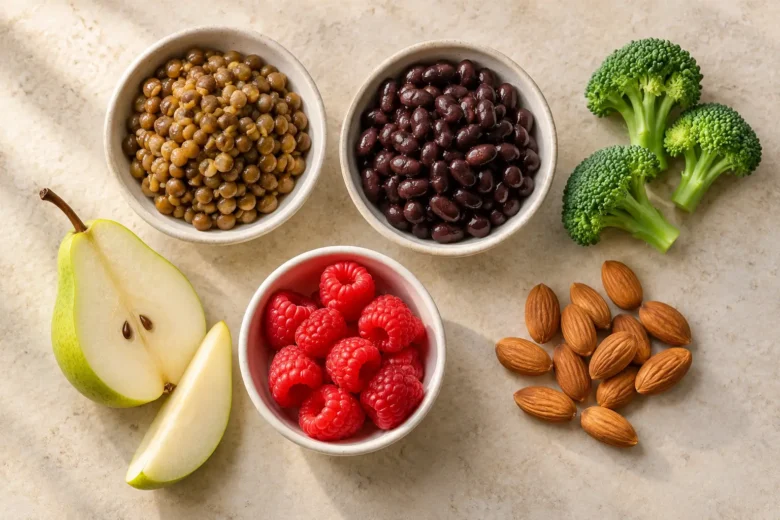
Some of the simplest high-fiber foods are already on grocery shelves you visit every week. Half a cup of cooked lentils provides about 7.8 grams of fiber, half a cup of cooked black beans provides 7.5 grams, and a medium pear provides 5.5 grams. A cup of raspberries contains about 8 grams, although half a cup may be closer to the amount you would put in a bowl of yogurt.
If you’re trying to eat more fiber, start with foods that fit a meal you already make. Black beans can go into a taco bowl, cooked barley can make a soup more substantial, and an apple can turn a quick snack into one with several grams of fiber. The chart below compares 12 foods in portions you can measure at home.
High-fiber foods chart
| Food | Portion | Fiber | Easy way to use it |
|---|---|---|---|
| Lentils, cooked | ½ cup | 7.8 g | Stir into tomato soup or spoon over roasted vegetables |
| Black beans, cooked | ½ cup | 7.5 g | Add to a taco bowl with rice, cabbage, and salsa |
| Chickpeas, cooked | ½ cup | 6.3 g | Toss into a cucumber and tomato salad |
| Bulgur, cooked | ½ cup | 4.1 g | Toss with parsley, cucumber, and lemon |
| Pearled barley, cooked | ½ cup | 3.0 g | Add to mushroom soup or a grain bowl |
| Raspberries | ½ cup | 4.0 g | Fold into plain yogurt, fresh or thawed |
| Pear | 1 medium | 5.5 g | Slice for a snack or a green salad |
| Apple, with skin | 1 medium | 4.8 g | Pack whole or serve sliced with cheese |
| Broccoli, cooked | ½ cup | 2.6 g | Toss with lemon and add to a grain bowl |
| Sweet potato, cooked | ½ cup | About 3.2 g | Serve roasted or mash with smoked paprika |
| Chia seeds | 1 tablespoon | 4.1 g | Stir into yogurt and let the seeds soften |
| Almonds | 1 ounce | 3.5 g | Chop over a salad or pack as a snack |
Fiber figures come from the federal Food Sources of Fiber table. The values for raspberries, broccoli, and sweet potato were scaled from the listed one-cup portions. Grain and legume portions are measured after cooking. Actual amounts vary with the food, brand, and portion size.
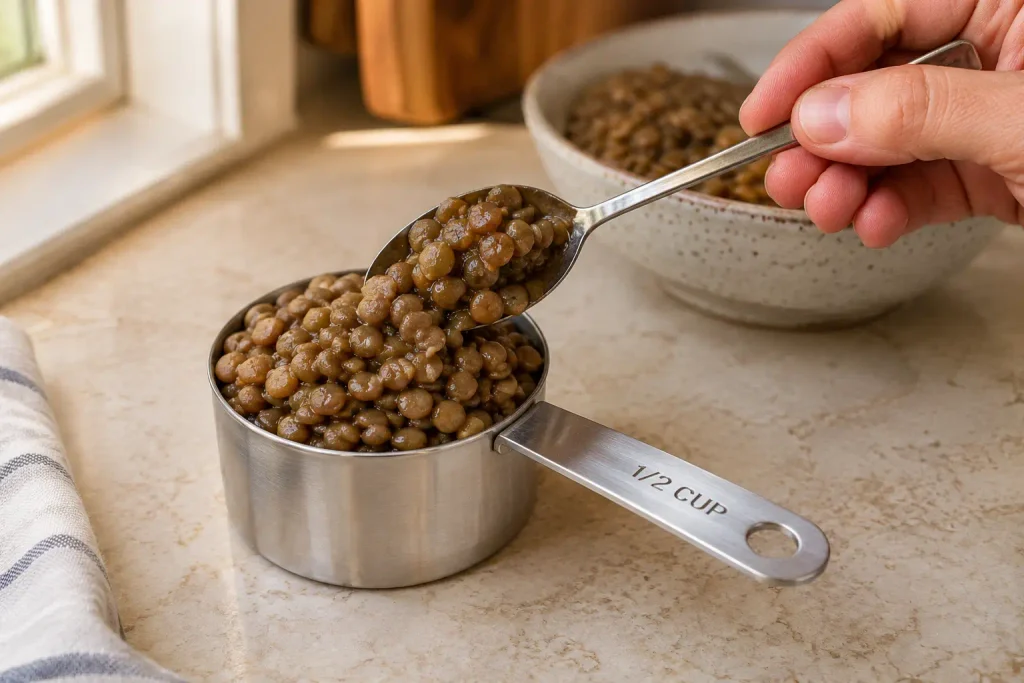
Half a cup of cooked lentils provides about 7.8 grams of fiber.
Beans and lentils for lunches and dinners
Beans and lentils give you some of the largest fiber amounts in the chart for a half-cup portion. They’re particularly easy to use in meals that already include rice, tortillas, or a broth. Canned beans can go straight into a salad after draining and rinsing. Use the Nutrition Facts label for the packaged product when you want a closer estimate for what you’re actually eating.
- Lentils work in meals that usually start with a sauce or soup. Add cooked brown or green lentils to tomato sauce for a thicker texture, or stir them into soup just before serving. If you’re cooking dry lentils for a salad, taste them toward the end so you can stop cooking while they still hold their shape.
- Black beans fit a taco bowl, quesadilla, or baked sweet potato. For a simple filling, mash some of the beans with salsa and leave the rest whole. The mashed portion helps hold the filling together.
- Chickpeas can add texture to a salad or become a sandwich filling. Mash them with lemon juice, plain Greek yogurt, and a little mustard. Add diced celery or pickles for crunch.
If you buy ingredients with several meals in mind, try this five-meal grocery list and prep plan for more ways to use beans and lentils across the week.
Grains that fit the meals you already make
If rice is your usual side, try replacing part of it with cooked bulgur or pearled barley in a meal where the grain picks up flavor from a sauce, dressing, or broth. A half cup of cooked bulgur has about 4.1 grams of fiber, and the same portion of pearled barley has about 3 grams.
- Bulgur has a texture that works in cold salads. Toss cooked bulgur with chopped parsley, cucumber, lemon, and olive oil. Add chickpeas if you want to make it more substantial.
- Pearled barley stays pleasantly chewy in vegetable soup. If you’re adding already-cooked barley, stir it in near the end. For a salad, cool it and toss it with vinaigrette while you prepare the vegetables.
Bread, wraps, and cereals can also contribute fiber. Two brands with similar names can have different amounts. Compare the listed serving sizes first, then look at the grams of dietary fiber. If one loaf lists two slices per serving and the other lists one, compare the amount you would get from the same number of slices.
Fruits and vegetables that are easy to keep on hand
A medium apple or pear travels well, frozen raspberries can stay in the freezer until you need them, and broccoli and sweet potatoes can do double duty as dinner sides and next-day lunch ingredients.
- Raspberries add about 4 grams of fiber per half cup. Try them in plain yogurt or let frozen berries thaw and spoon them, along with their juice, over cottage cheese.
- Pears provide about 5.5 grams of fiber per medium fruit. Slice one over a lunch salad with greens and toasted nuts, or pair it with plain yogurt at snack time.
- Apples with the skin provide about 4.8 grams per medium apple. Dice one into a cabbage slaw for a little sweetness, or pack it whole when you need a snack that can travel.
- Broccoli adds about 2.6 grams per half cup cooked. Steam frozen florets for a quick side, or roast fresh florets and serve them with chickpeas and lemon.
- Sweet potatoes add about 3.2 grams per half cup cooked. Roast them in cubes to mix with grains, or split a baked sweet potato and fill it with black beans and salsa.
For ideas that fit the first meal of the day, see high-fiber breakfast foods and simple ways to use them.
Nuts and seeds for small additions
Chia seeds provide about 4.1 grams of fiber per tablespoon. Stir them into a moist food such as yogurt and let them soften. If you’re just starting to increase your fiber intake, a teaspoon is an easy amount to try.
Almonds provide about 3.5 grams per ounce. A small handful works as a snack, and chopped almonds add crunch to a pear salad or a bowl of roasted vegetables. A topping may use less than an ounce, so estimate fiber based on how much you actually add.
Three ways to add fiber to meals you already eat
| If you already eat… | Try this change | Fiber in the foods you add |
|---|---|---|
| A rice bowl with chicken and salsa | Add ½ cup cooked black beans and ½ cup cooked broccoli | About 10.1 g |
| A green salad with egg or tuna | Add ½ cup cooked chickpeas and ½ cup cooked bulgur | About 10.4 g |
| Plain yogurt as an afternoon snack | Stir in ½ cup raspberries and 1 tablespoon chia seeds | About 8.1 g |
The totals count only the additions listed. If those portions are larger than you usually eat, start with one ingredient or a smaller serving. A quarter cup of black beans, for example, adds roughly 3.8 grams of fiber to a bowl.
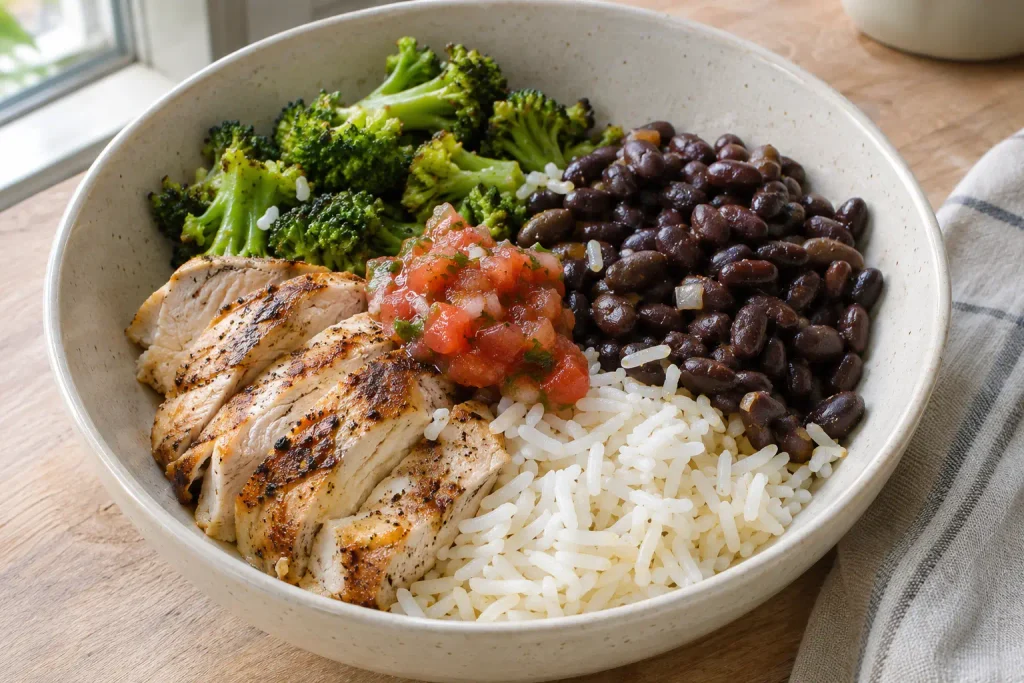
Adding half a cup each of cooked black beans and broccoli provides about 10 grams of fiber.
For help choosing a protein and a side to go with those additions, see how to build a balanced lunch or dinner with everyday foods.
What does the fiber number on a U.S. food label mean?
The FDA uses 28 grams as the Daily Value for dietary fiber on the U.S. Nutrition Facts label. The percentage on the package shows how much one labeled serving contributes toward that reference value. The FDA considers 5% Daily Value or less low and 20% or more high for a nutrient. Check the serving size alongside the percentage, especially if the amount you normally eat differs from the labeled serving. FDA Nutrition Facts label guide
If you’re adding more fiber than you usually eat, increase it gradually and drink water regularly. Try a single change you can repeat, such as adding chickpeas to one lunch this week or packing a piece of fruit with a snack you already bring to work. National Institute of Diabetes and Digestive and Kidney Diseases
Frequently asked questions
Which foods in this list have the most fiber per serving?
Lentils and black beans lead this chart, with 7.8 and 7.5 grams per cooked half cup, respectively. Among the fruit portions shown, a medium pear has 5.5 grams. When comparing fiber amounts, keep the portion in mind. A cup of raspberries contains about 8 grams, double the amount in the chart’s half-cup serving.
How can I add fiber to lunch without changing the whole meal?
Add chickpeas to a salad, spread mashed black beans inside a wrap, or pack a pear alongside your usual sandwich. If you take soup to work, stir in cooked lentils or barley before portioning it. Choose one addition that fits the way you already prepare lunch.
Can canned beans or frozen fruit count as high-fiber foods?
Yes. Canned beans and frozen berries are practical choices when you want an ingredient that keeps longer. For a packaged product, use the serving size and dietary fiber grams on the label to compare options. Drain and rinse canned beans when you want a milder flavor for a salad or sandwich.
References
- Dietary Guidelines for Americans. Food Sources of Fiber (standard portions).
- U.S. Food and Drug Administration. How to Understand and Use the Nutrition Facts Label.
- National Institute of Diabetes and Digestive and Kidney Diseases. Eating, Diet, & Nutrition for Constipation.
This article is for general education. See our Medical Disclaimer.