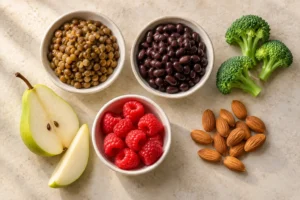
Adults generally need 22 to 34 grams of fiber per day, depending on age and sex, according to the National Institute of Diabetes and Digestive and Kidney Diseases (NIDDK). The 28 grams you see referenced on U.S. Nutrition Facts labels is the FDA’s Daily Value for a 2,000-calorie diet. It’s a useful number for comparing packaged foods, while your own daily target may vary. NIDDK · FDA
If you’ve already seen how much fiber is in a serving of lentils or a pear, the next question is how those servings add up across a day. Below is one example using foods you can find at a regular grocery store, plus a way to get started when your usual meals provide less fiber. 12 High-Fiber Foods and How Much Fiber Is in Each Serving
How much fiber should you aim for each day?
Start by separating the number you use to plan meals from the percentage you use to compare products. The NIDDK’s 22-to-34-gram range gives adults a general planning reference. The FDA’s 28-gram Daily Value is the standard behind the % Daily Value printed next to “Dietary Fiber.” NIDDK · FDA
For example, if your cereal has 5 grams of fiber per serving and you eat half the listed serving, count about 2.5 grams. If you’re comparing cereals for breakfast, compare portions you’d actually pour into the bowl. Two brands may use different labeled serving sizes, even if the boxes look similar. FDA
To get a starting estimate, write down what you eat on an ordinary day. Use the label for packaged foods and a food composition table for items such as fruit and cooked lentils. When a table lists a cooked portion, measure the food after cooking. Look at which meals already provide fiber and which would be easiest to change. USDA Food Sources of Fiber
What does about 28 grams of fiber look like in a day?
This example spreads fiber across breakfast, lunch, dinner, and a snack. The 28.4 grams are the subtotal for the foods counted in the table. Your total may be higher if you add other ingredients that contain fiber.
| Meal | What to serve | Fiber counted |
|---|---|---|
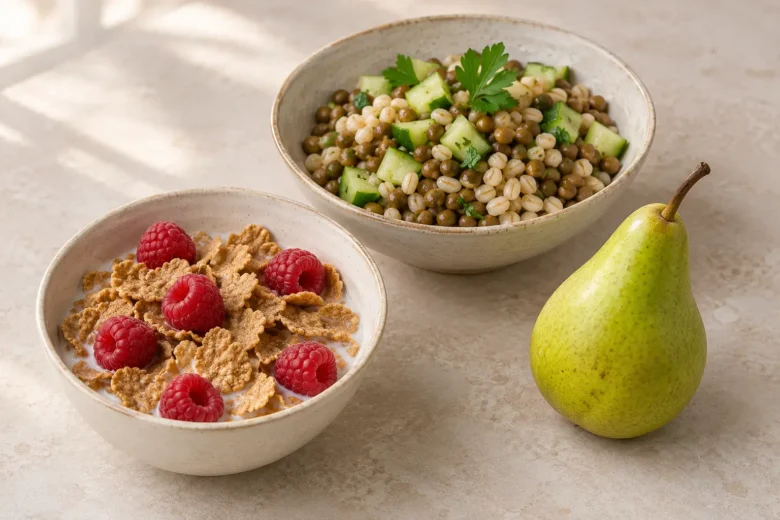
| Breakfast | Bran flakes with ½ cup raspberries and milk or plain yogurt | 9.5 g from ¾ cup bran flakes (5.5 g) and raspberries (4.0 g) |
| Lunch | Lemon lentil and barley bowl with chopped cucumber and herbs | 10.8 g from ½ cup cooked lentils (7.8 g) and ½ cup cooked pearled barley (3.0 g) |
| Snack | One medium pear, sliced or packed whole | 5.5 g |
| Dinner | Baked salmon or chicken with rice and broccoli | 2.6 g from ½ cup cooked broccoli |
| Total from the foods counted | 28.4 g |
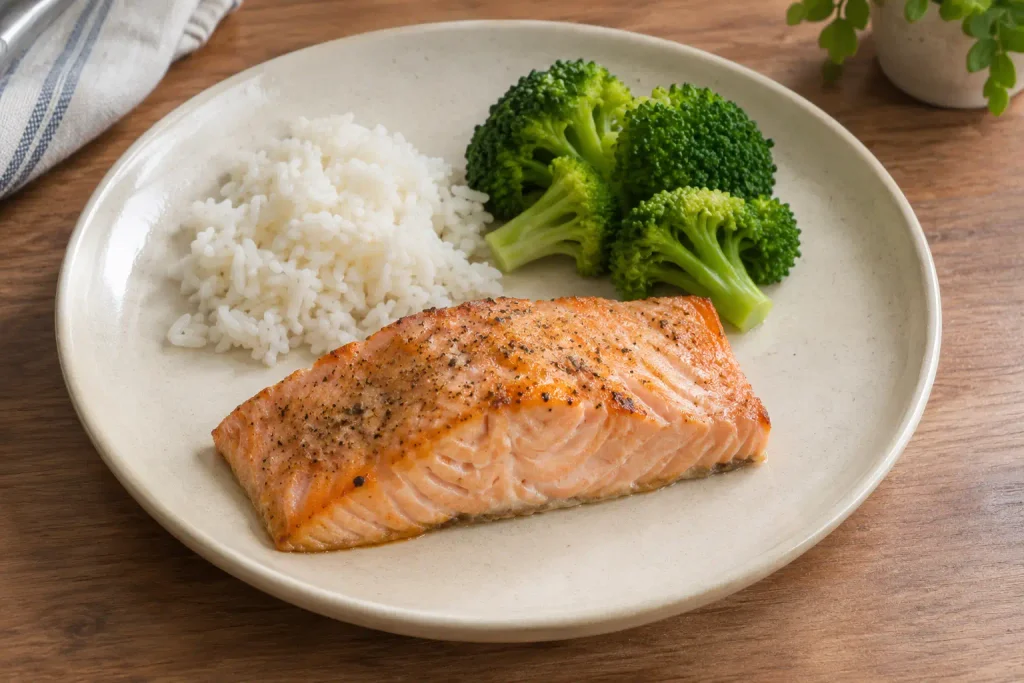
In the sample dinner, half a cup of cooked broccoli contributes about 2.6 grams of fiber.
The amounts are approximate and use USDA food composition data. Cereal varies by brand, so use your own box’s Nutrition Facts label. The barley and lentils are measured cooked, and the broccoli and raspberries use half of the USDA table’s one-cup amounts. Adjust the rest of the meal to your appetite and needs. USDA Food Sources of Fiber
If you prefer oatmeal or a savory breakfast, build around what you enjoy. Use the breakfast guide to choose an option, then see how it changes your total. At dinner, a protein food, a starch, and a vegetable give you several places to add fiber. For instance, serve the broccoli you already buy or swap part of the rice for cooked beans. High-Fiber Breakfast Foods · How to Build a Balanced Lunch or Dinner With Everyday Foods
How to get more fiber without changing every meal
Start with an addition you can repeat. A quarter cup of cooked lentils adds about 3.9 grams to a bowl of soup. A half cup of raspberries adds about 4 grams to your usual breakfast. Choose the change that fits the groceries you have and the meal you’re likely to make again. USDA Food Sources of Fiber
Use the same ingredient in two meals. Cook lentils for a lunch bowl and stir some into soup another day. If you already make rice bowls, keep canned beans on hand and check their label for fiber per serving. The meal prep guide shows how rice, beans, lentils, and vegetables can work across several budget-friendly meals. Cheap Meal Prep Ideas

Top your usual yogurt with half a cup of raspberries to add about 4 grams of fiber.
Increase fiber gradually and drink water regularly. Give yourself time to get used to the first change before adding another. If a larger serving leaves you feeling gassy or bloated, try a smaller portion and build up more slowly. Ask your health care professional for guidance if you’ve been prescribed a low-fiber diet or have ongoing digestive symptoms. NIDDK · Cleveland Clinic
Frequently asked questions
Is 30 grams of fiber a day a reasonable goal?
Thirty grams falls within the NIDDK’s general adult range. A suitable target for you depends on factors such as your age, sex, and any dietary guidance you’ve received. If you currently eat much less, start with a smaller increase and build gradually. NIDDK
Can I get 28 grams of fiber from food alone?
Yes. The sample day reaches roughly 28 grams using cereal, fruit, lentils, barley, and broccoli. You can also use beans, other vegetables, whole grains, nuts, and seeds. The amounts depend on what you choose and how much you eat. USDA Food Sources of Fiber
Do frozen fruits and vegetables count?
Yes. Plain frozen raspberries can go into oatmeal, and frozen broccoli works in bowls, soups, or as a side. If you’re tracking grams, use the Nutrition Facts label where available and match the amount you eat to the serving size shown. FDA
References
- National Institute of Diabetes and Digestive and Kidney Diseases (NIDDK). Eating, Diet, & Nutrition for Constipation. Accessed November 25, 2026.
- U.S. Food and Drug Administration (FDA). How to Understand and Use the Nutrition Facts Label. Accessed November 25, 2026.
- U.S. Department of Agriculture (USDA). Food Sources of Fiber: Standard Portions. August 2024. Accessed November 25, 2026.
- Cleveland Clinic. Your Fiber Intake: What’s the Right Amount?. April 30, 2025. Accessed November 25, 2026.
Medical disclaimer
This article is for general education. For guidance specific to your health or a prescribed diet, speak with a qualified health care professional.